WEBINARS
GAIN Webinar Series: National Laboratories Capabilities Webinar
June 4, 2020
The objective of this webinar was to provide an overview of the national lab capabilities specific to demonstrating advanced nuclear energy technology.
Additional Resources
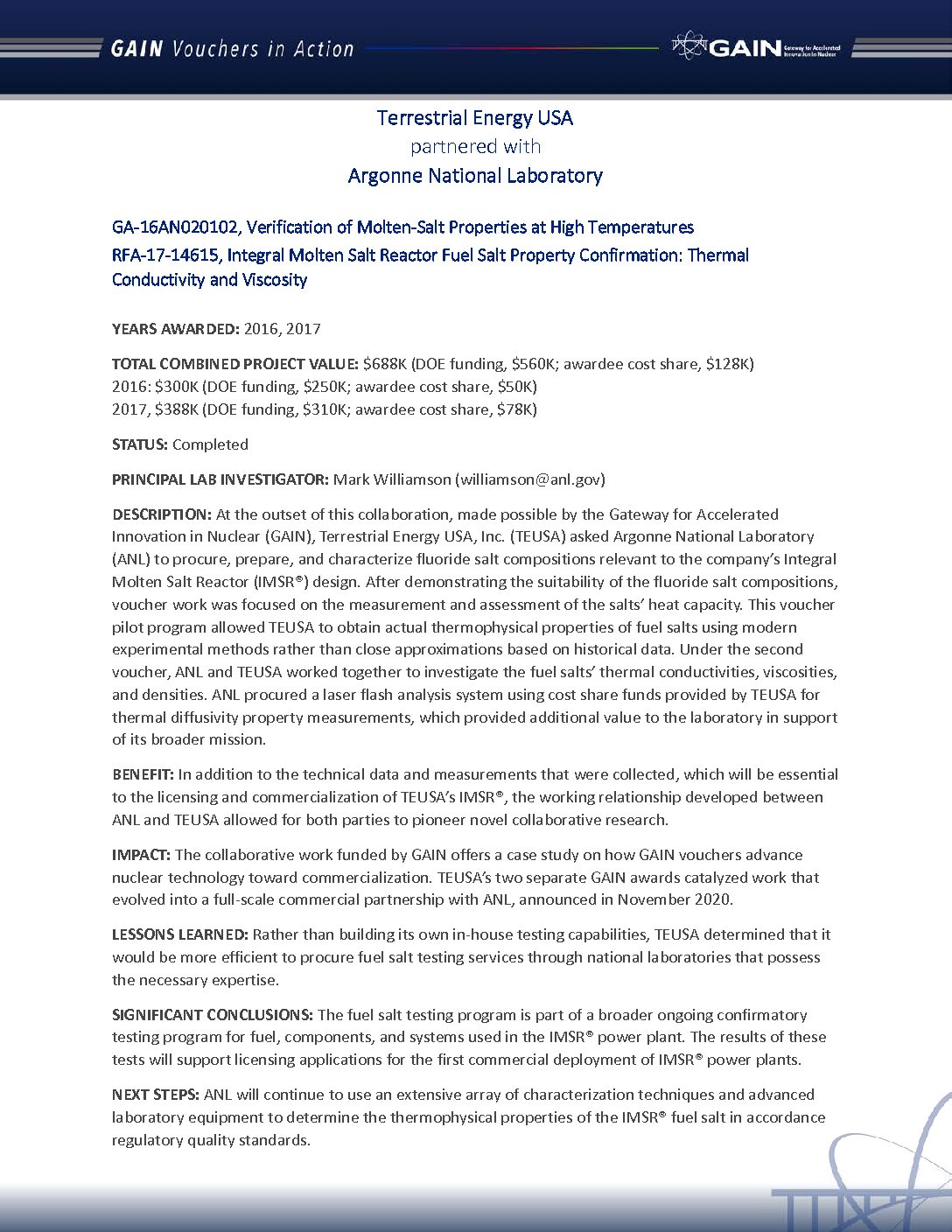
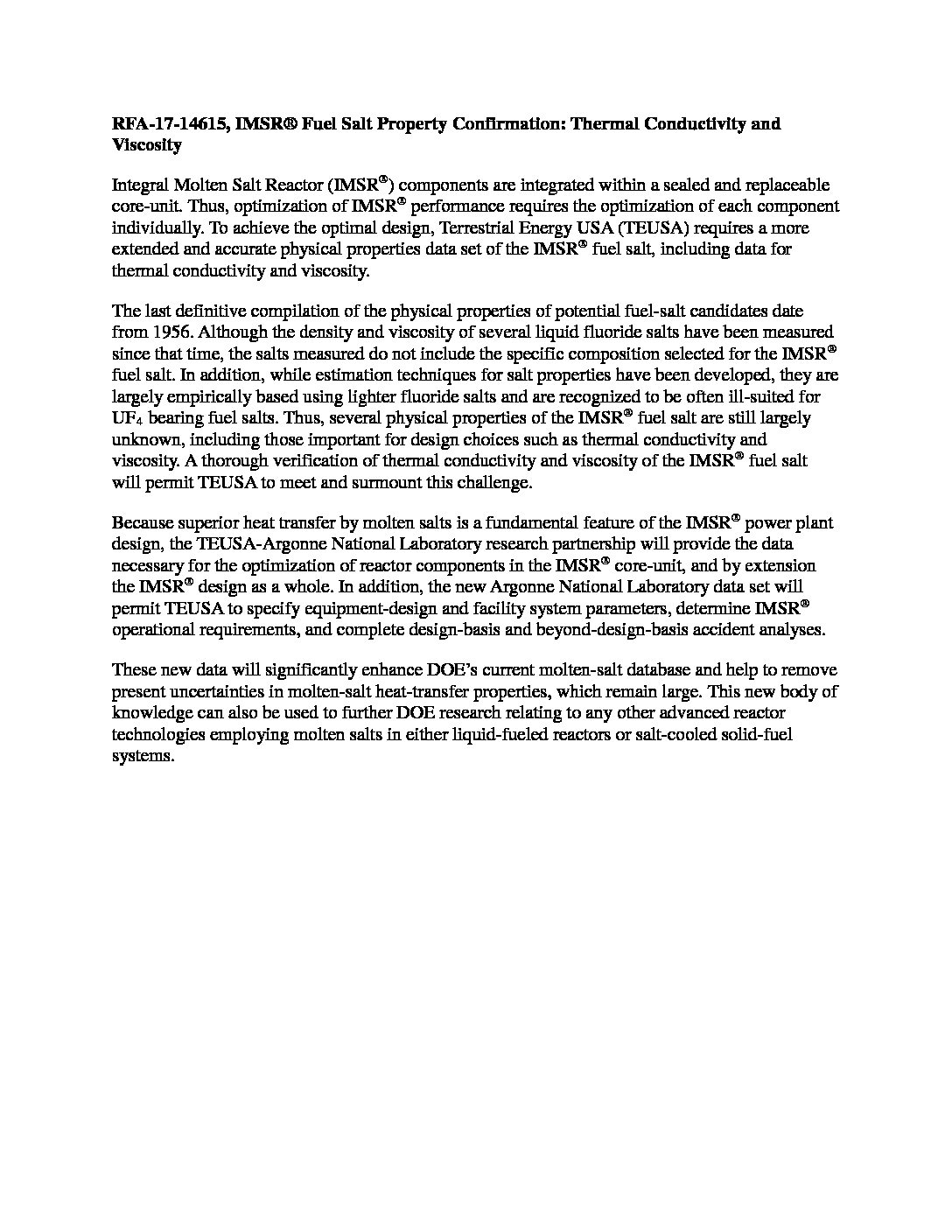
IMSR Fuel Salt Property Confirmation Thermal Conductivity and Viscosity
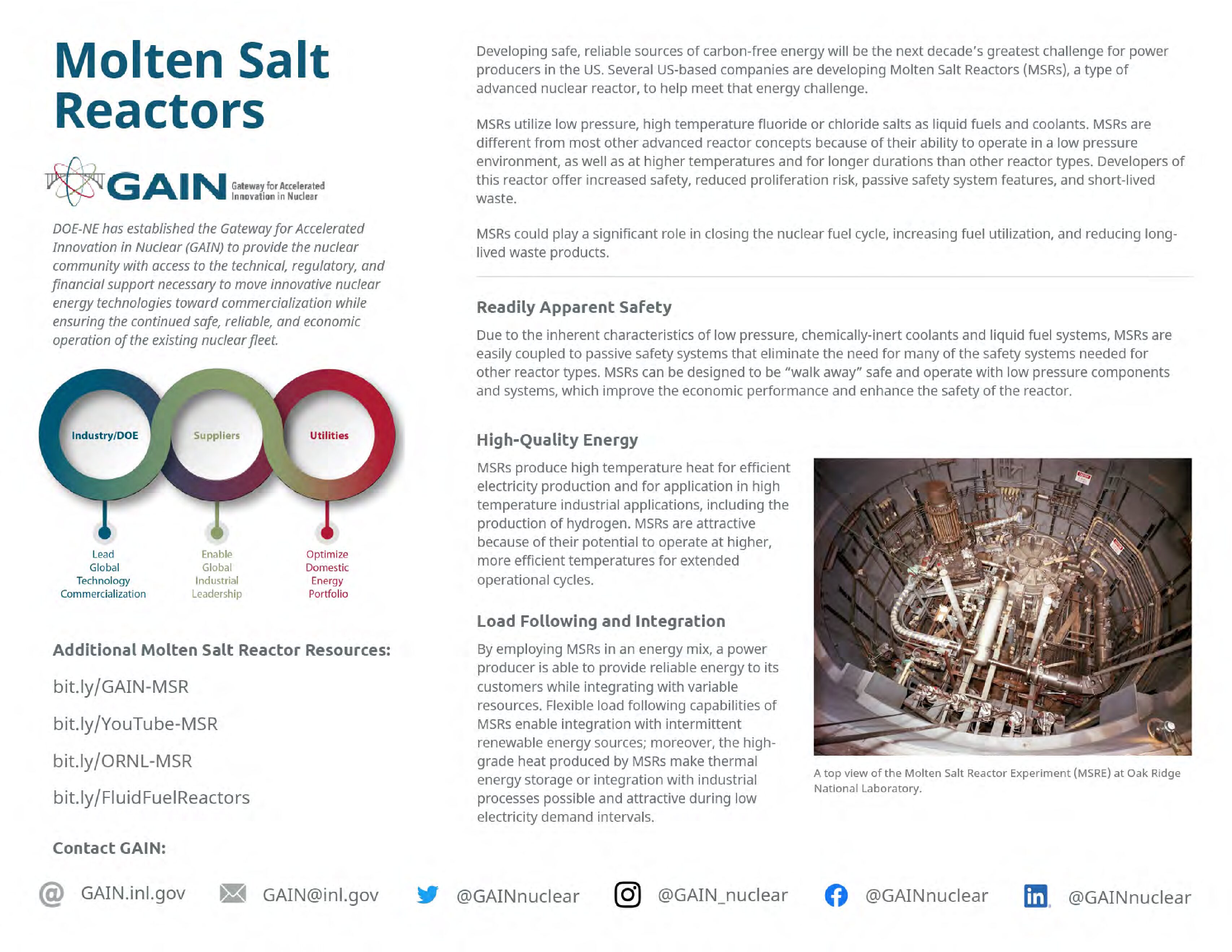
Molten Salt Reactors
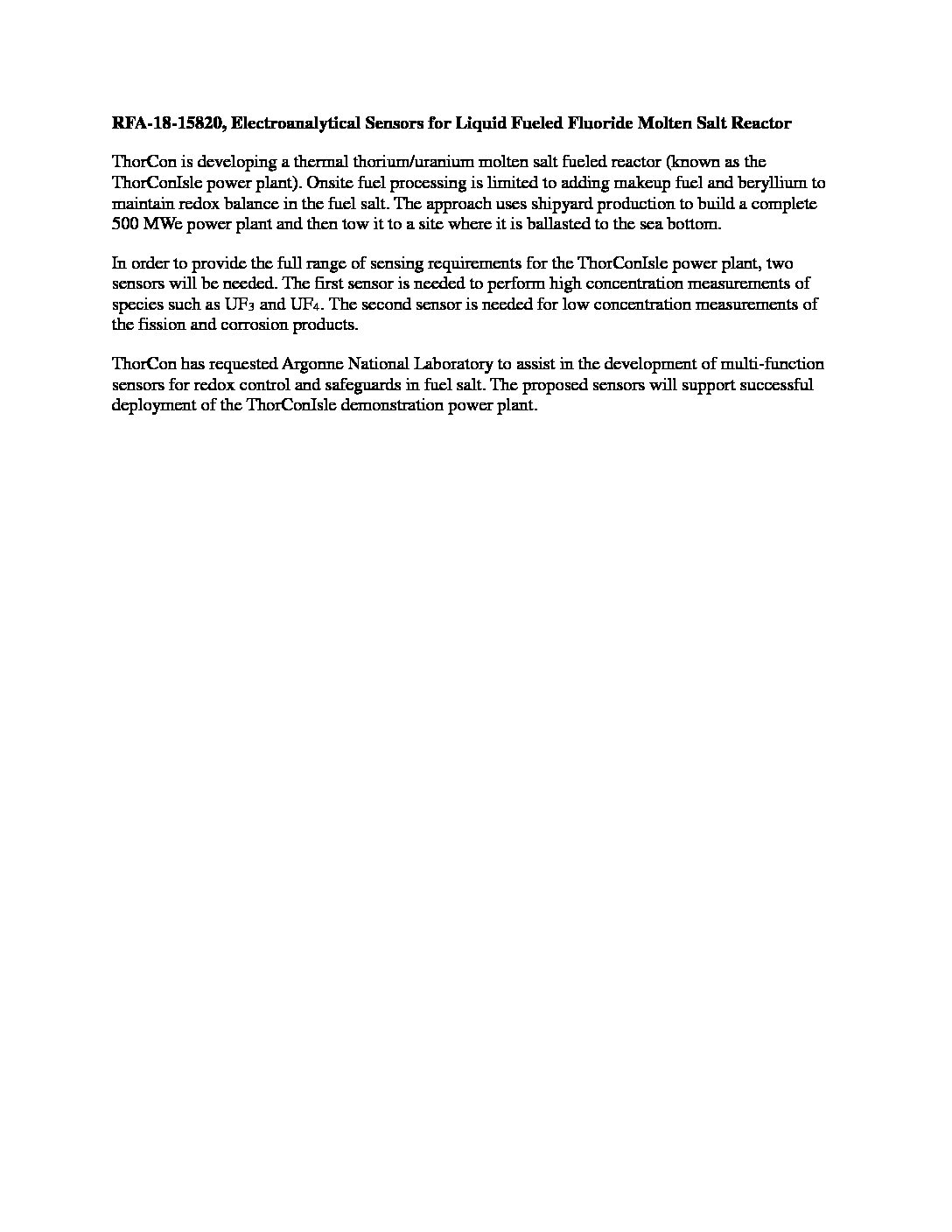
Electroanalytical Sensors for Liquid Fueled Fluoride Molten Salt Reactor Abstract
Thermal Property Measurements for an LEU-Fueled Molten Salt Reactor
Optimization and Assessment of the Neutronics and Fuel Cycle Performance of the Transatomic Power Molten Salt Reactor Design
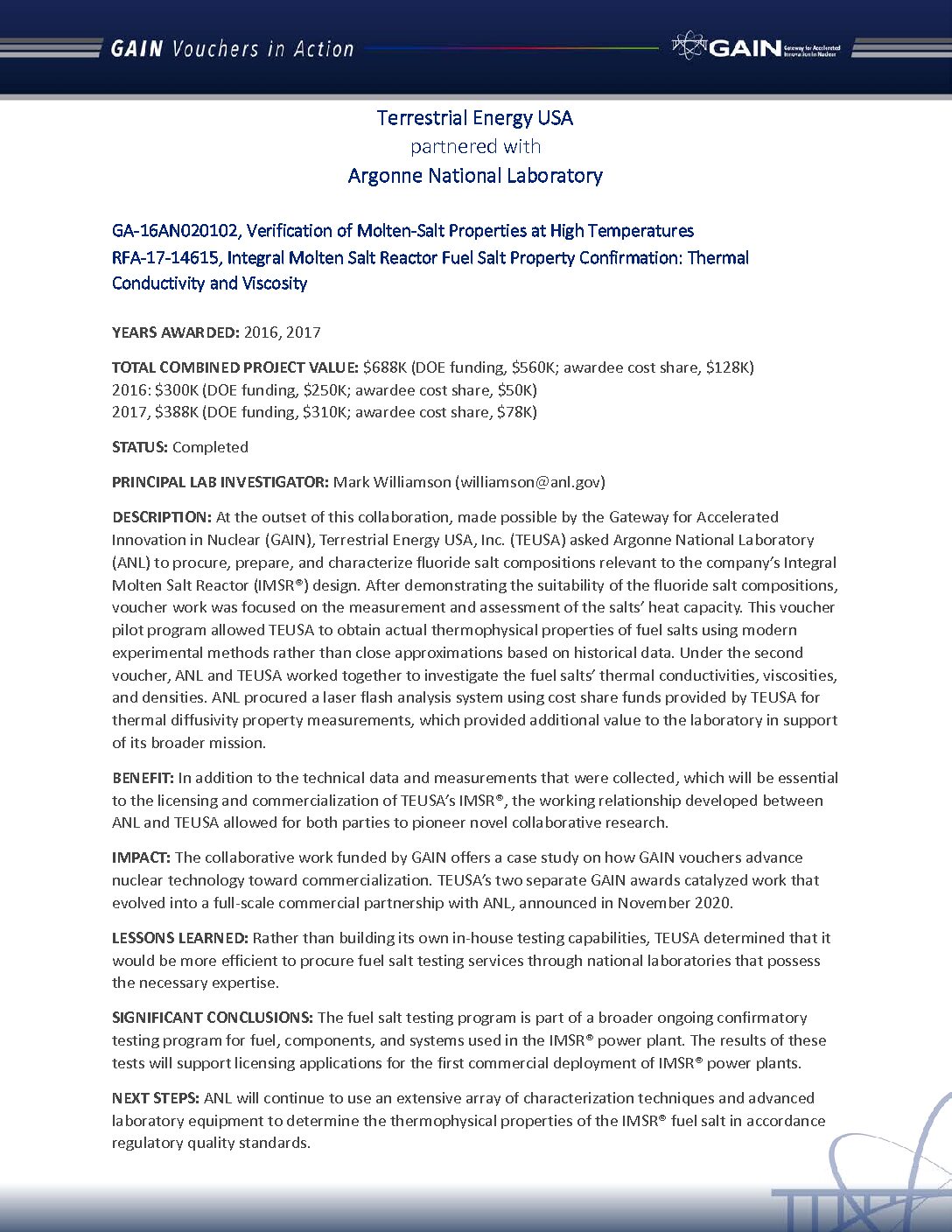
Verification of Molten-Salt Properties at High Temperatures
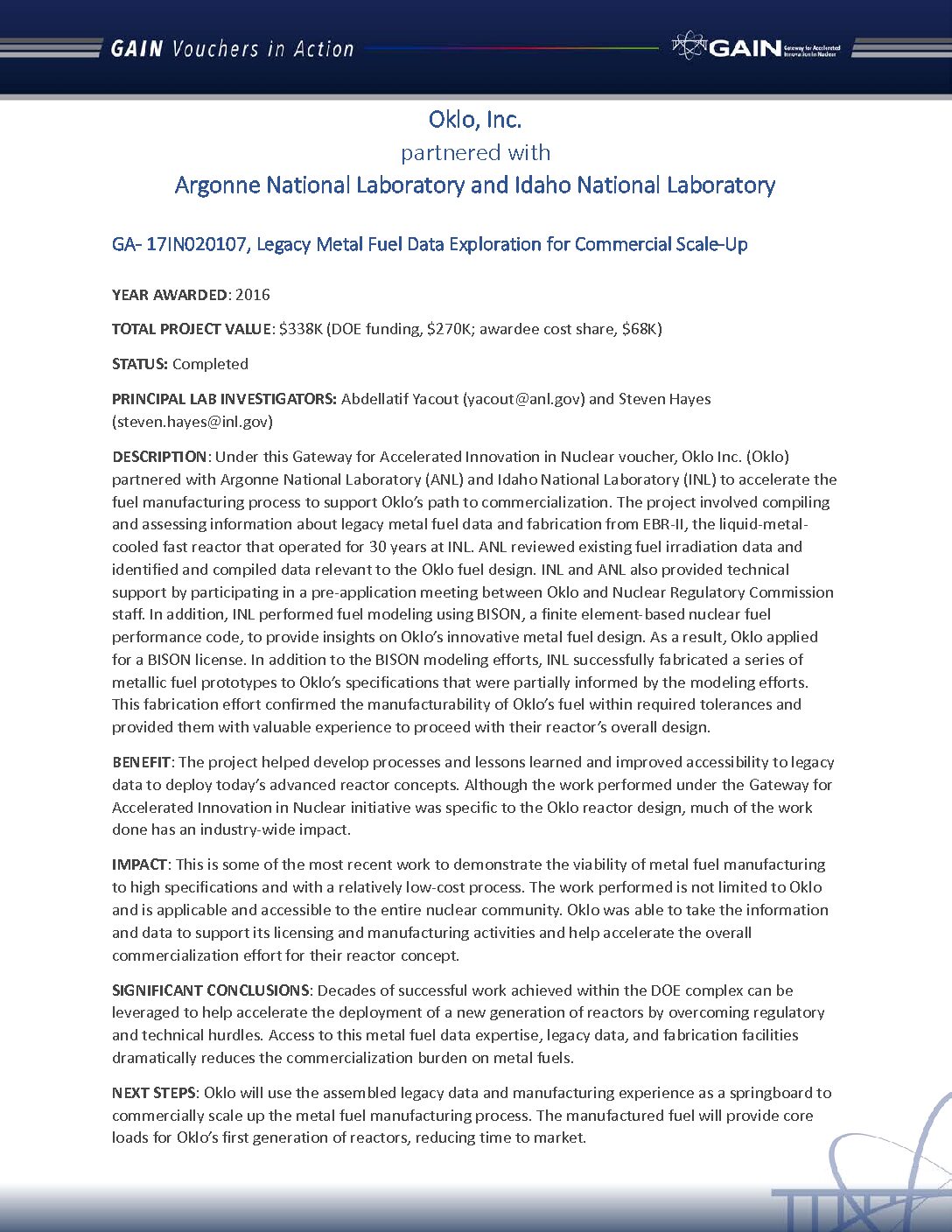
Legacy Metal Fuel Data Exploration for Commercial Scale-Up
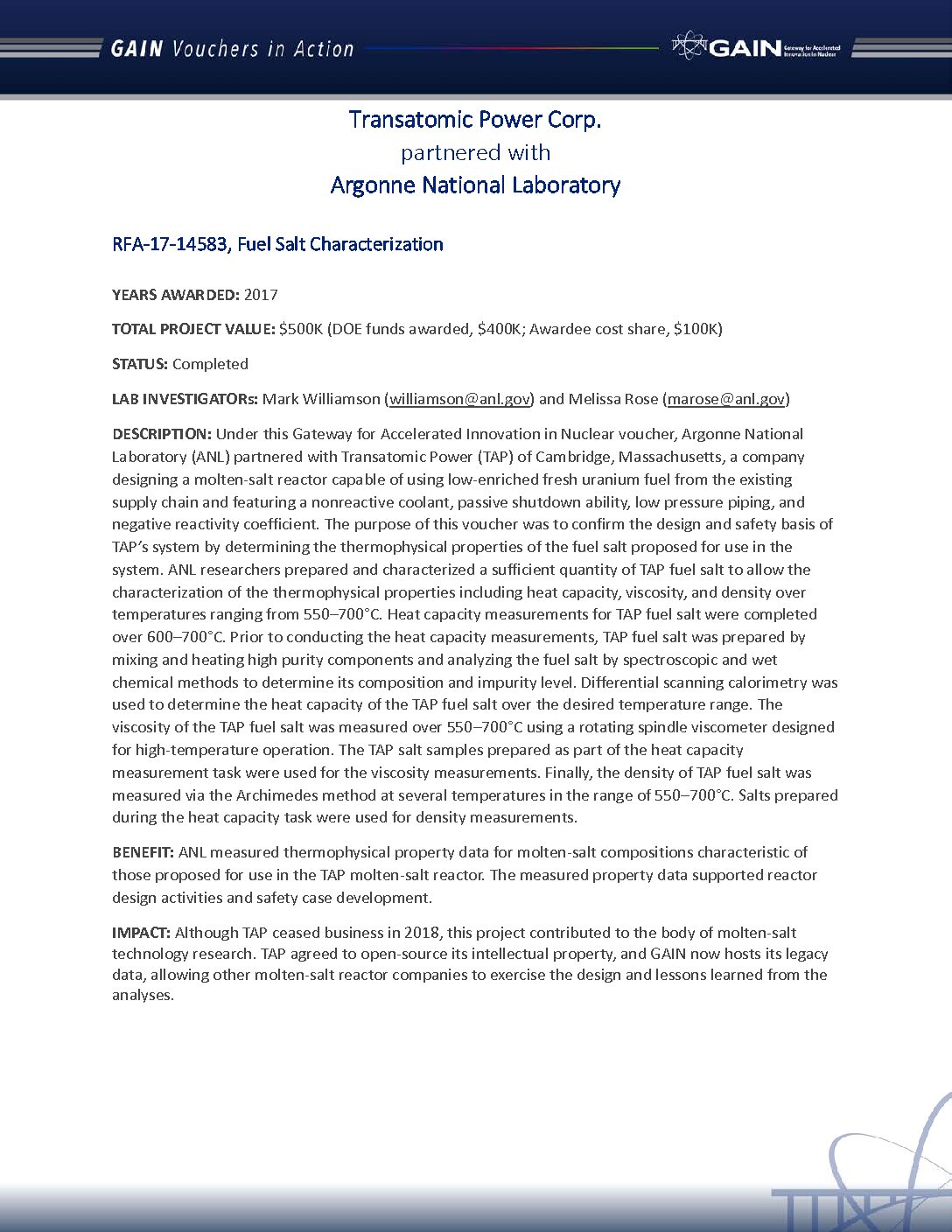
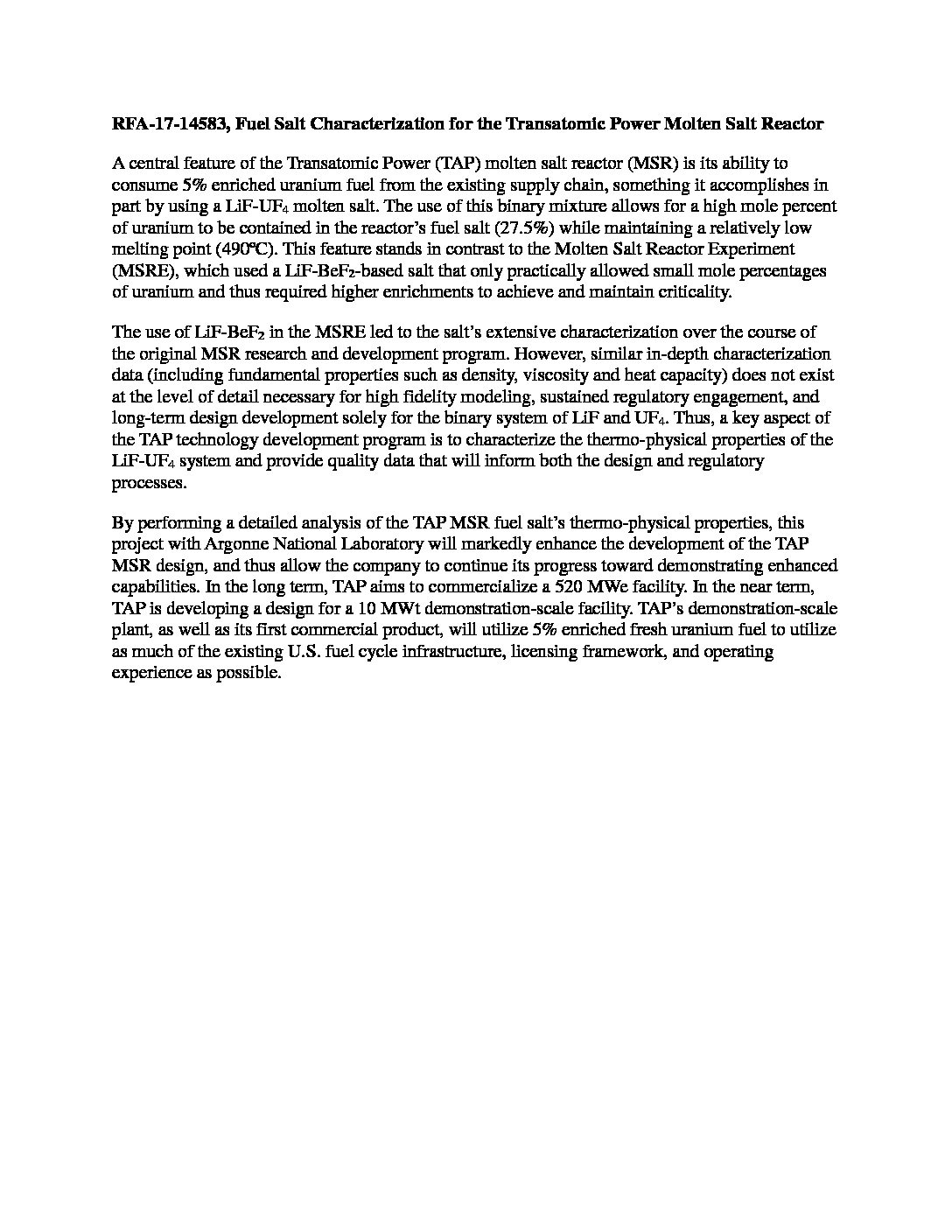
Fuel Salt Characterization
Fuel Salt Characterization for the Transatomic Power Molten Salt Reactor
IMSR Fuel Salt Property Confirmation Thermal Conductivity and Viscosity
Advanced Moderator Module Validation for the Alpha Tech Micro Molten Salt Reactor
Evaluation of Power Fluidic Pumping Technology for Molten Salt Reactor Applications
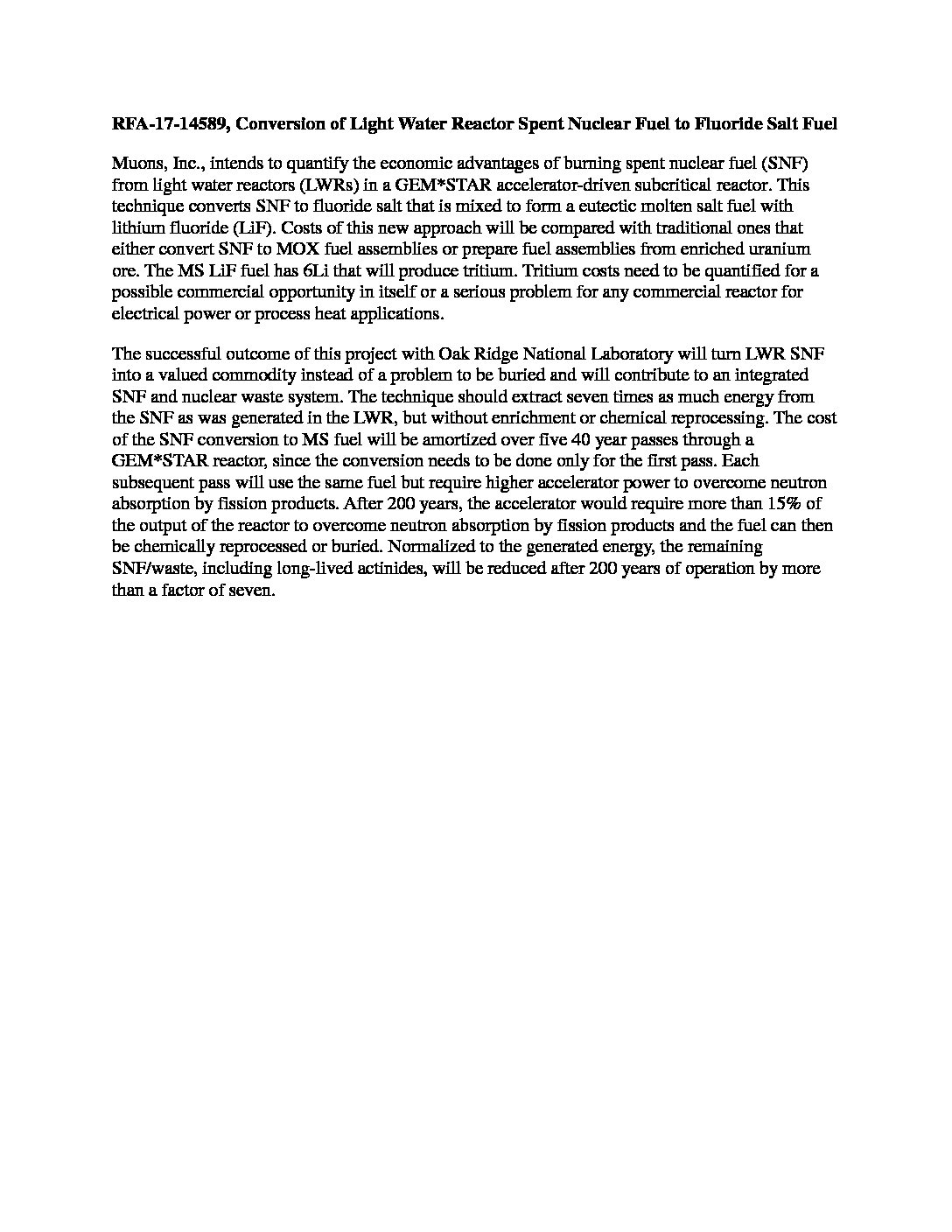
Conversion of Light Water Reactor Spent Nuclear fuel to Fluoride Salt Fuel
Development of the Microscale Nuclear Battery Reactor System
NEAMS Nuclear Energy Advanced Modeling and Simulation Program ThermalFluids Test Stand
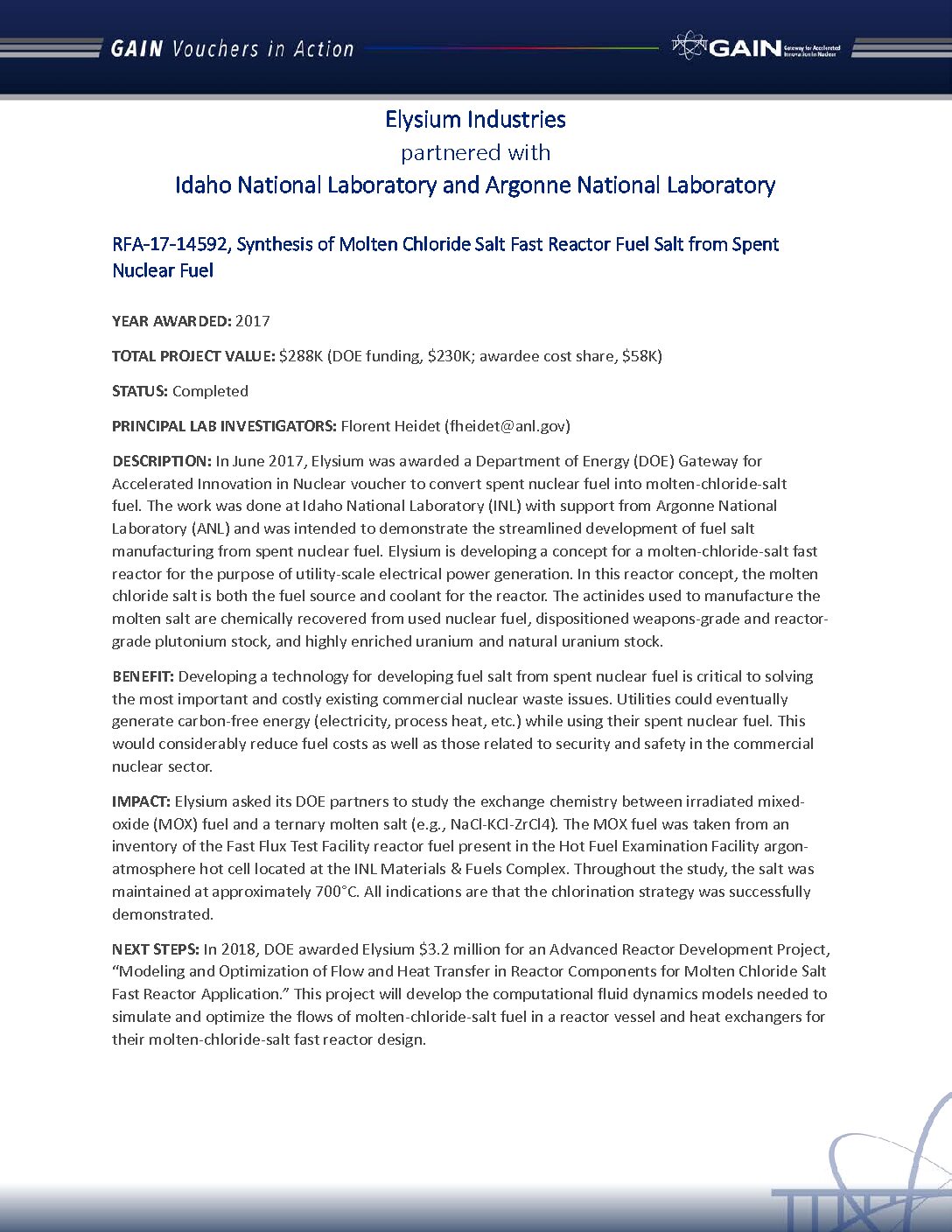
Synthesis of Molten Chloride Salt Fast Reactor Fuel Salt from Spent Nuclear Fuel
Metal Organic Frameworks for Noble Gas Management in the Lithium Fluoride Thorium Reactor
Metatomic Molten Salt Immersed Hydrochlorination Subsystem Characterization
ICP-MS for Analysis of Lithium Isotopic Ratios in Materials Highly Enriched in 7Li
Thermophysical Property Measurements of NaCl-KCl-UCl3
Molten Salt Nuclear Graphite Qualification Plan
Pebble Bed Large Eddy Simulations for Lower Order Methods Benchmarking and Uncertainty Quantification Development
RELAP5-3D Development and Assessment for Liquid-fueled Molten Salt Reactor Licensure
Thermal Property Measurements for an LEU-Fueled Molten Salt Reactor
Synthesis of Molten Chloride Salt Fast Reactor Fuel Salt from Spent Nuclear Fuel
Electroanalytical Sensors for Liquid Fueled Fluoride Molten Salt Reactor
Conversion of LWR Spent Nuclear Fuel to Fluoride Salt Fuel
Development of Analytical Techniques for Trace Impurities in 2LiF-BeF2
Development of Oxygen IR Calibration Standards for High-Purity Chloride Salts
Thermogravimetric Analysis of IMSR Fuel Salt Simulants
Metomic Molten Salt Immersed Hydrochlorination Subsystem Characterization
Salt to Metal to Sal Heat Transfer in Narrow Fuel Pins
ICP-MS for Analysis of Lithium Isotopic Ratios in Materials Highly Enriched in 7Li
Flow Enhanced Electrochemical Sensors for Molten Salt Reactors
Investigation of the Structural Integrity and Corrosion Resistance of Surface Treatment on Alloy-709 in a Molten Fluoride Salt Environment
Advanced Functional Membrane Testing for Noble Gas Management in a Molten Salt Reactor
Nuclear Waste Management Strategy for Molten Salt Reactor Systems
Experimental Validation of Nondestructive Assay Capabilities for Molten Salt Safeguards FY20
Evaluation of Optical Techniques for Molten Salt Reactor Materials Control and Accounting
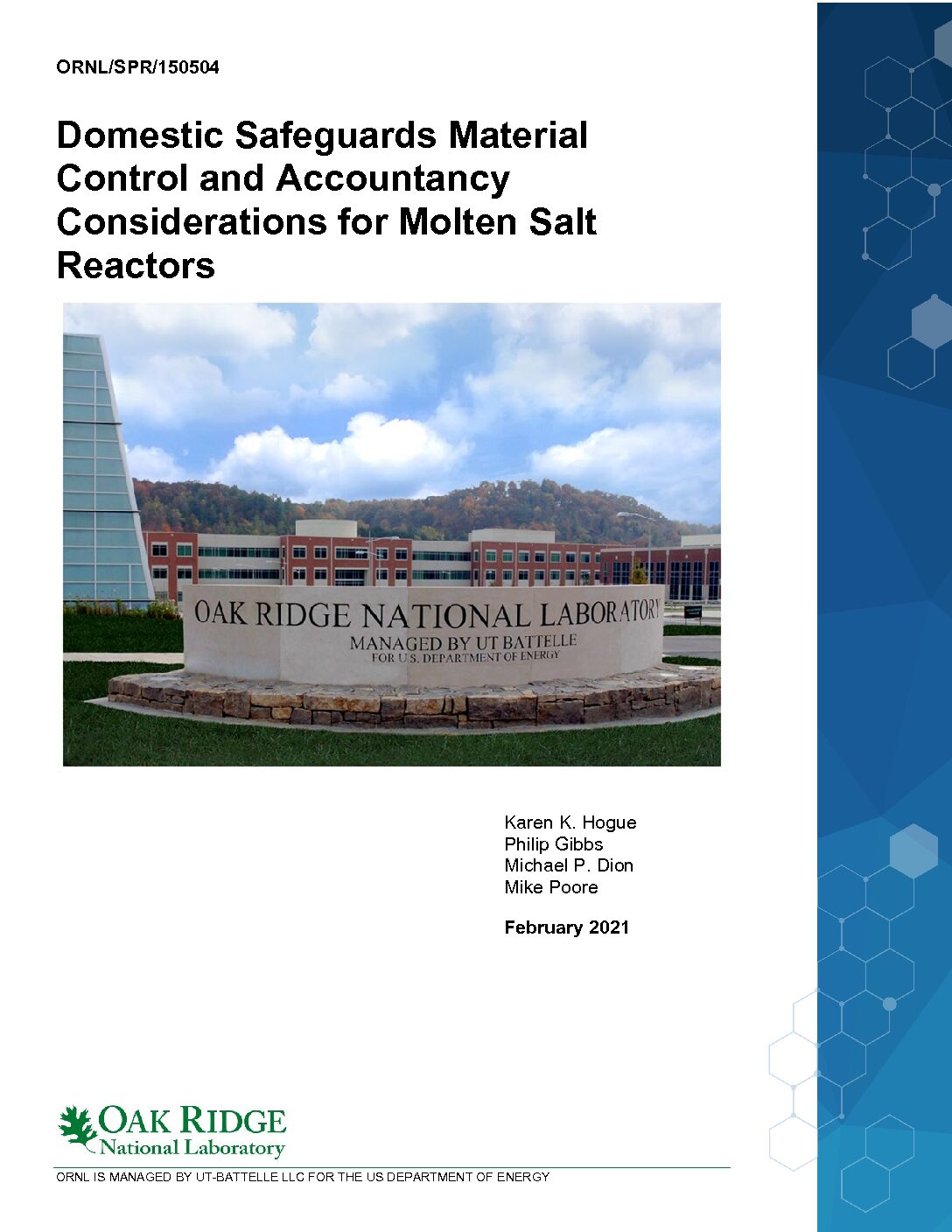
Domestic Safeguards Material Control and Accountancy Considerations for Molten Salt Reactors
Molten Salt Reactor Signatures And Modeling Study
Experimental Validation of NDA Capabilities for Molten Salt Reactors
Chlorine Nuclear Data Measurement and Evaluation
Online Monitoring for Molten Salt Reactor and Matieral Control & Accounting
Molten Salt Reactor Safeguards Modeling
Materials Control & Accounting for Molten Salt Reactors
Advanced Safeguards and Securities Workshop Overview
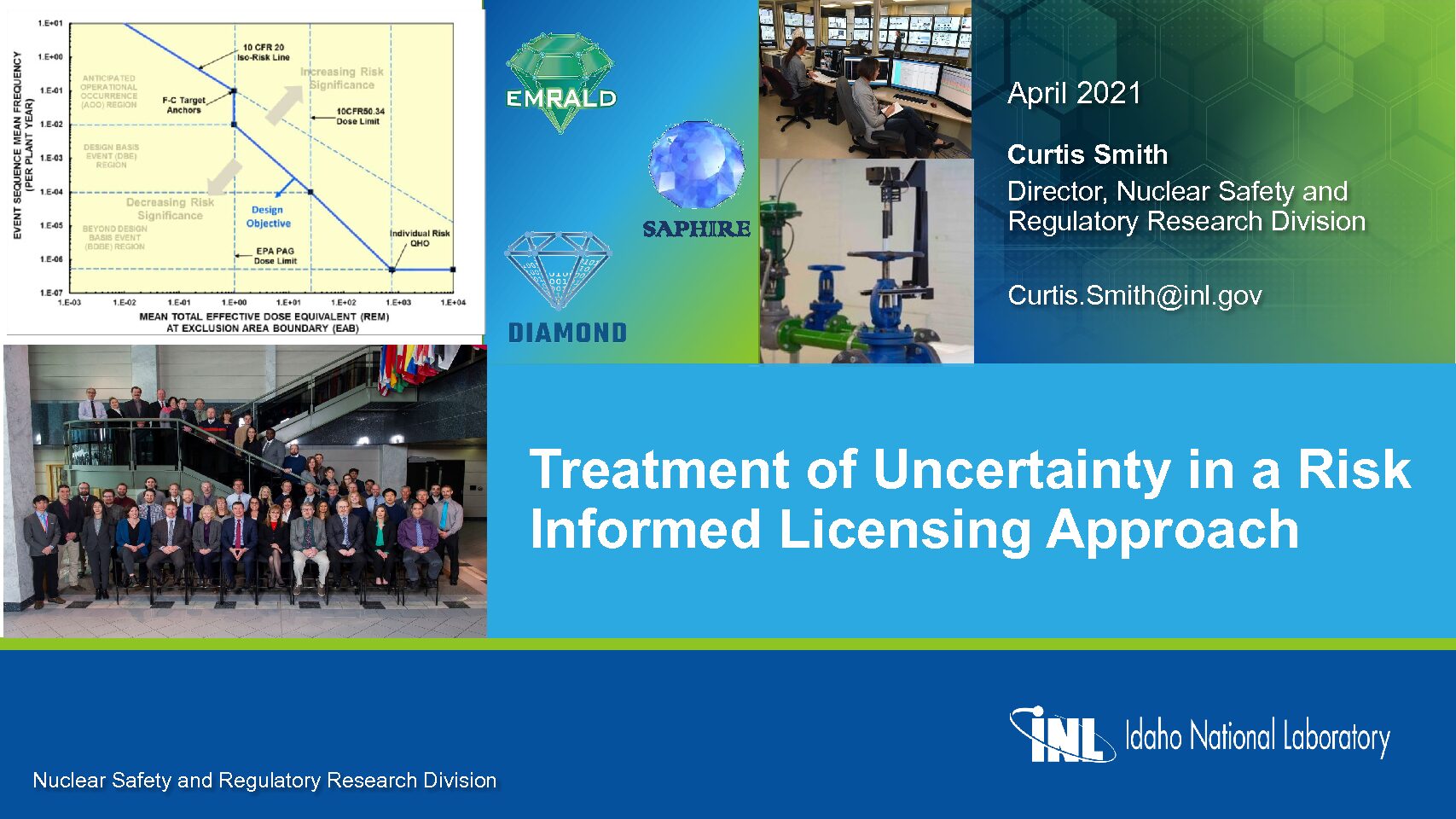
Treatment of Uncertainty in a Risk-Informed Licensing Approach
Advanced Reactor Safeguards: Program Overview
Performance of DMA Fused Radar and Video
Small Modular Reactor Security by Design and Analysis
Liquid Fluoride Thorium Reactor (LFTR) Preliminary Safeguards Assessment
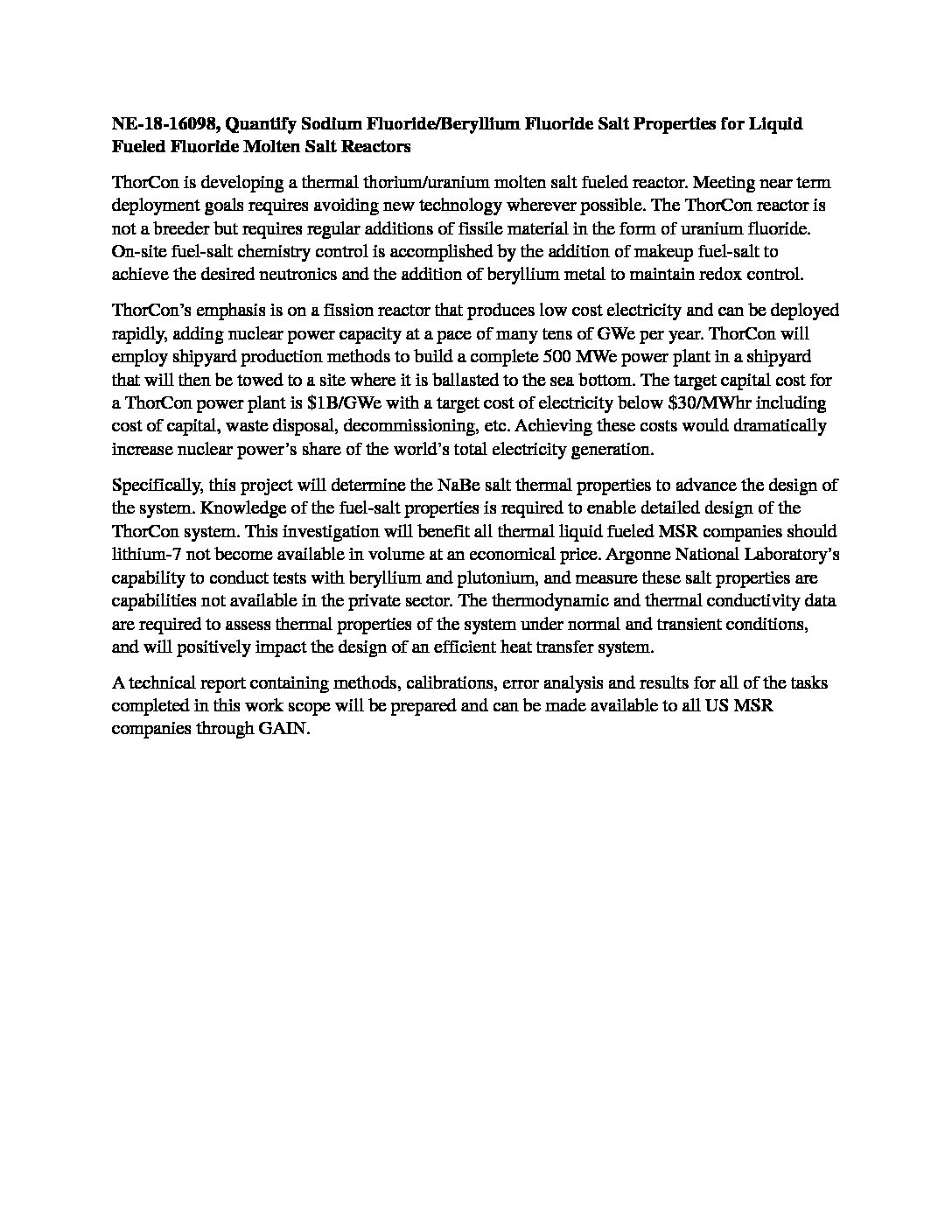
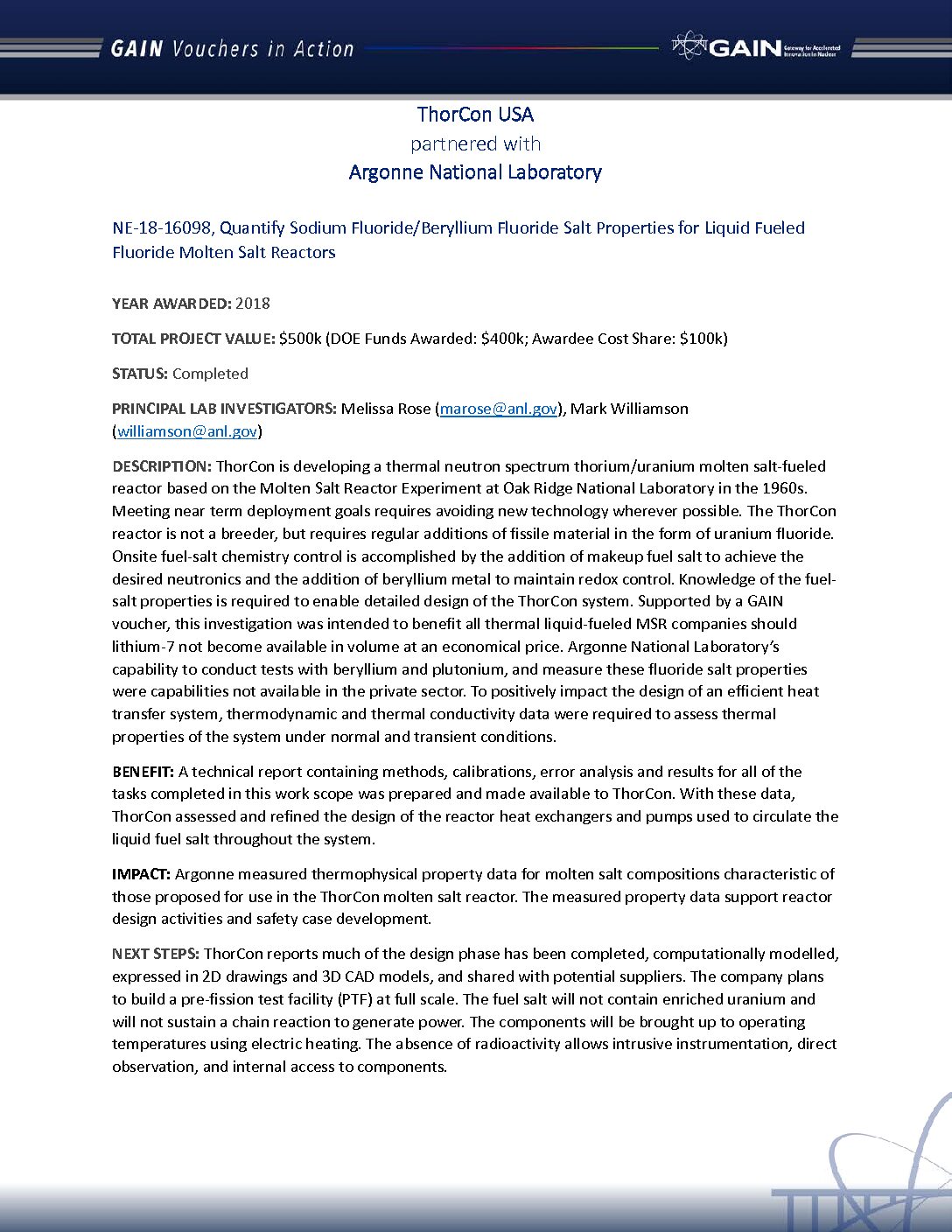
Quantify Sodium FluorideBeryllium Fluoride Salt Properties for Liquid Fueled Fluoride Molten Salt Reactors
Quantify Sodium Fluoride/Beryllium Fluoride Salt Properties for Liquid Fueled Fluoride Molten Salt Reactors
Assessing Fuel Cycle Options for Elysium Molten Chloride Salt Fast Reactor from Spent Nuclear Fuel, Plutonium, and Depleted Uranium
Chemical Method Development for Quantifying Oxygen in Beryllium Salt
Develop ASME Section III Division 5 Design Rules for Elevated Temperature Cladded Class A Type 316 Stainless Steel Components
Domestic Safeguards Material Control and Accountancy Considerations for Molten Salt Reactors
Liquid Fluoride Thorium Reactor (LFTR) Preliminary Safeguards Assessment
Metal Organic Frameworks for Noble Gas Management in the Liquid Fluoride Thorium Reactor
Thermophysical Properties Measurements of NaCl-PuCl3
RELAP5-3D Development and Assessment for Liquid-fuels Molten Salt Reactor Licensure
Pebble Bed Large Eddy Simulations for Lower Order Methods Benchmarking and Uncertainty Quantification Development
Density Measurements of Plutonium Bearing Salts via Neutron Beam Dilatometry
Deployment of Advanced Electroanalytical Sensors in the Kairos Power Engineering Test Unit (ETU)